Treatment for Failing Implants - Phoenix, AZ

Expert Care for Unstable or Infected Implants in Phoenix, AZ

close up of implant model within the dental center

What You Need to Know About Failing Dental Implant Treatment

Dental implants restore comfortable eating and speaking, stop jawbone deterioration, and provide a strong, stable foundation for restorations. Although the success rate is as high as 98%, dental implant complications can occur.

At Anderson Dental, our implant dentist, Dr. Lori Anderson, is highly skilled in peri-implantitis treatment and dental implant repair in Phoenix, AZ. If you suspect any issues impacting your implant, the best chance to save a failing implant and protect your smile is early treatment!

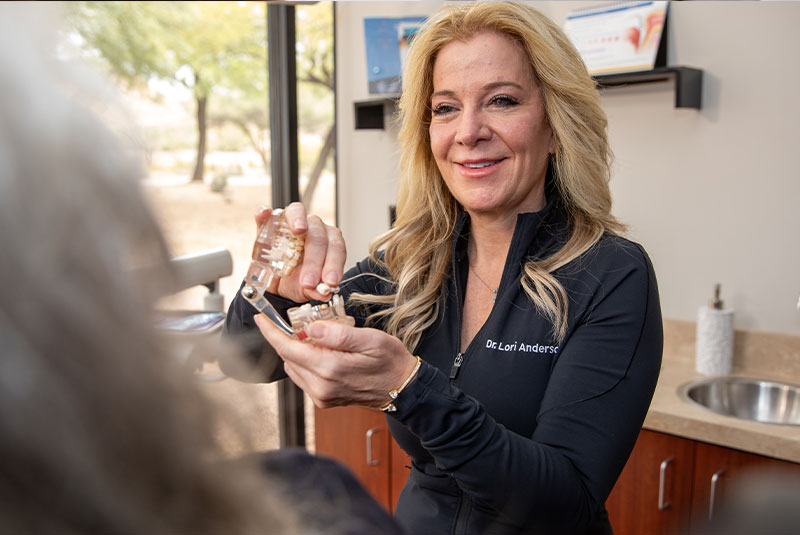
doctor showcasing dull arch model to patient for their implant procedure

Why Do Dental Implants Fail?

Factors that can lead to implant failure include:

Implant Failure Can Occur Shortly After Surgery or Years Later

Early dental implant failure generally occurs within the first 3 to 6 months after surgery, often before the final crown is placed, during the critical osseointegration healing phase. Keep in mind that normal surgery-related discomfort is quite different than radiating discomfort caused by implant failure. If your pain lasts for more than a few days or grows worse, it’s better to be safe than sorry and call us right away.

Regular dental check-ups and implant maintenance at Anderson Dental and good oral hygiene are critical, as many late failures are associated with factors that develop over time. If your implant pain returns long after the procedure, or if you suddenly have trouble chewing foods that never gave you trouble before, these issues may be possible signs of late implant failure.

Know the Warning Signs

Symptoms Of A Failing Dental Implant

Early detection is key. If you're experiencing any of the following signs, we encourage you to contact our office promptly — Dr. Anderson will evaluate and address any concerns right away.

  • Persistent or radiating pain near the implant
  • Red, inflamed, or bleeding gums
  • Difficulty chewing or biting
  • Mobility of the implant post (wiggling or loosening)
  • Swelling, pus, or other signs of infection

Dental implant care – Anderson Dental Phoenix
headshot of patient and doctor

How We Approach Dental Implant Repair and Salvage

During a comprehensive examination, Dr. Anderson will evaluate the implant site and take digital X-rays to determine the exact cause of failure. For infection or peri-implantitis treatment in Phoenix, AZ, we may be able to manage the infection with antibiotics, deep cleaning, and improved oral hygiene, while leaving the implant in place.

For significant bone loss or a loose dental implant, advanced procedures such as bone grafting may be necessary, while in other cases, the implant must be removed. After your mouth has healed, Dr. Anderson can plan a replacement implant if needed, thereby restoring long-term stability and function.

Don’t wait if you notice warning signs—early intervention greatly increases your chances of saving a failing implant in Phoenix, AZ!

Rescue Your Implant-Restored Smile!

Schedule a visit before issues worsen.